|
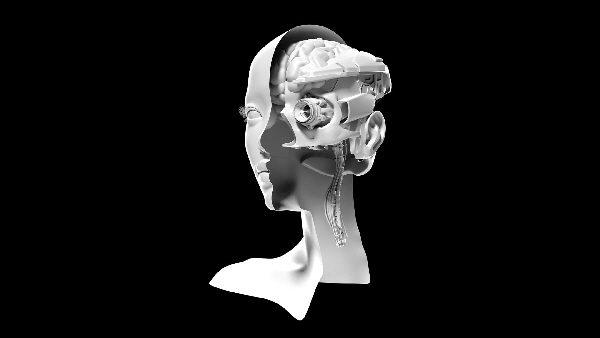
To make the analysis and comparison precise, in this paper human beings and computer systems are all specified as “agents” that “receive percepts from the environment and perform actions” [5]. At a given moment t, the full history of an agent can be represented as a triple <P, S, A>, where P = <p0, …, pt> is the sequence of percepts, A = <a0, …, at> is the sequence of actions, and S = <s0, …, st> is the sequence of internal states the system has gone through. When a typical human mind is represented as H = <PH, SH, AH>, and a typical intelligent computer as C = <PC, SC, AC>,a working definition of AI corresponds to a definition of similarity between C and H, when the two are described at a certain level of abstraction. Pei Wang, “What Do You Mean by “ AI “ Link: https://cis.temple.edu/~pwang/Publication/AI_Definitions.pdf
https://www.mckinsey.com/business-functions/mckinsey-analytics/our-insights/the-analytics-academy-bridging-the-gap-between-human-and-artificial-intelligence?cid=other-eml-alt-mcq-mck&hlkid=ce6e48dd9ca84daf8bba2c925b78db16&hctky=2690004&hdpid=96f548e2-2b97-4470-8bff-8e0835fc2e3c |
|||